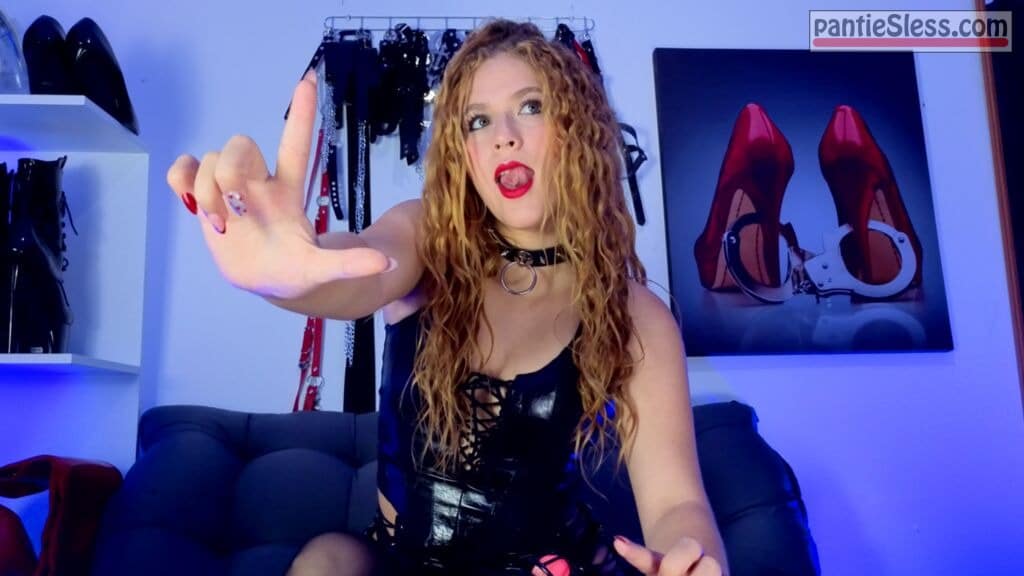








The lingerie category has outlasted a hundred trends, and the reason has less to do with the clothes than with a basic fact about attention: anticipation holds it better than exposure.
The lingerie niche is one of the most durable categories on OnlyFans, and the usual explanation — that men simply like lingerie — misses what’s actually going on. The category endures because it runs on a psychological mechanic that predates the platform by centuries: suggestion outperforms disclosure. Anticipation, it turns out, is stickier than exposure, and the lingerie niche is built almost entirely on anticipation.
Understanding why it works means looking past the garment to the economics and psychology underneath — how the niche sells access rather than exposure, why it supports a distinct kind of creator, and why, in the end, the clothing is the least important part of the whole thing. Here’s what actually drives it.
Suggestion beats disclosure
Start with the core mechanic. The pull of lingerie is fundamentally about the implied rather than the explicit — it frames and suggests rather than reveals, and the human mind is more engaged by what it anticipates than by what it’s simply handed. That isn’t a niche quirk; it’s how attention works.
The most successful creators in this lane understand it and sell accordingly. They trade in exclusivity and curiosity, not exposure. As a common industry maxim puts it, the creators who win aren’t selling more skin — they’re selling access, a curated drip of something that feels private and earned. Curiosity is what drives the click; a sense of exclusive access is what converts it into a subscription that lasts.
It’s a craft, not a costume
The second driver is aesthetic craft, which is why professionally produced lingerie and boudoir content commands premium pricing. Thoughtful styling, quality photography, a clear aesthetic identity and consistent theming turn a category anyone can enter into one where a specific creator becomes worth paying for.
The garment is a canvas; the styling, lighting and staging are the actual product. That’s a defensible skill, and it’s why the niche rewards intentional creators over casual ones. Subscribers with genuine purchase intent are paying for a look that’s been carefully made, not simply worn — the same reason a well-shot fashion editorial outperforms a snapshot.
The anonymity option
A third, underrated driver: lingerie is one of the few niches genuinely compatible with anonymity. Because the attention rests on the staging and the aesthetic rather than a face, a creator can crop, mask or frame themselves out entirely — the subscriber is paying for the composition, not a personal identity.
That lowers the barrier to entry, since it requires no expensive setup, and it makes the niche viable for people who want income without fully exposing themselves. It’s a rare combination: high perceived value alongside low required self-disclosure. Few categories on the platform offer both at once, which is part of why this one keeps attracting new creators.
But the garment isn’t the business
Here’s the honest core, and it’s the same for every niche on the platform. The lingerie category attracts an audience; it does not, by itself, make the money. On OnlyFans, messages drive 69.74% of all creator revenue, The Globe and Mail reported, citing an OnlyGuider study, and industry analysis is blunt that a niche typically explains only about a third of a creator’s income — conversation and relationship explain the rest.
The lingerie aesthetic gets the right subscriber in the door; retention and monetization happen in the inbox. That’s also why fans find these creators the way they find any niche — off-platform, because OnlyFans has no search of its own. A directory of lingerie and boudoir creators, indexed by category, is how someone interested in the niche reaches active creators in it. OnlyGuider ranks activity granularly enough to organize it by category, CBS News reported, citing the company’s data.
Why it endures
Put the pieces together and the durability makes sense. The lingerie niche rests on a psychological constant (anticipation), a genuine skill (aesthetic production), and a practical advantage (optional anonymity) — none of which is a passing trend.
It’s a large and stable market, too. US fans spent an estimated $2.63 billion on the platform in 2025, AOL reported, citing OnlyGuider, and lingerie has been a fixture of it throughout. Categories built on fundamentals outlast categories built on novelty, and this one is built squarely on fundamentals.
The caveats
A few honest limits. The niche-earnings and “a third of revenue” figures come from industry analysis rather than audited data, so treat them as directional. OnlyGuider’s numbers are modelled estimates. The platform’s brutal concentration applies here as everywhere: the top 0.1% of creators take 76% of all revenue, per the same OnlyGuider study, so a durable niche improves the odds without guaranteeing anything. And “lingerie” is a self-assigned, fuzzy label describing positioning, not a fixed formula. The niche helps; it never does the work on its own.